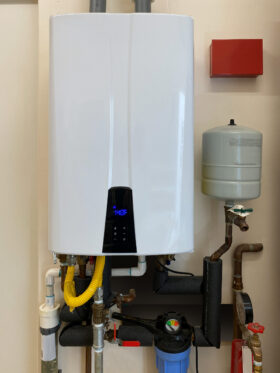
Tankless water heaters are manufactured and installed to deliver reliable hot water efficiently, but summer maintenance remains important. In areas like Dallas and Plano, high temperatures, hard water, and heavy seasonal water use help contribute to reduced efficiency, mineral scale buildup, and unexpected error codes. Routine inspections and maintenance checks help improve energy efficiency, protect the unit, and reduce breakdowns during periods of high demand.
Many homeowners think of winter as the time of water heater problems, but summer is actually an ideal time to service your tankless system. We typically recommend checking for performance issues, flushing the system, and addressing warning signs before minor issues escalate into costly repairs. Being proactive helps your system maintain consistent water temperatures and reliable operation throughout the year.
Why Summer Maintenance Matters for Tankless Water Heaters
Summer conditions in North Texas can impact plumbing systems in multiple ways. Municipal water supplies in Dallas and Plano often have high mineral content, increasing the likelihood of scale buildup in tankless water heaters. As water flows continuously through the heat exchanger, magnesium and calcium deposits start accumulating on internal components.
Mineral buildup forces a system to work harder to efficiently heat water. Over time, this can increase utility costs, reduce flow rates, and shorten equipment lifespan. Regular maintenance during the summer helps remove deposits before they cause long-term damage.
Summer is also a convenient season for maintenance because many households aren’t as dependent on constant hot water as they are during colder months. Scheduling service during this time allows industry professionals to finish cleaning and inspections before demand increases in the fall and winter.
How Scale Buildup Affects Tankless Water Heater Performance
Scale buildup is a common problem impacting tankless water heaters, particularly in hard water regions. Compared to a traditional storage tank, a tankless system relies on narrow internal passageways and heat exchangers, both of which are highly sensitive to mineral accumulation. Even a thin layer of scale might interfere with heat transfer efficiency.
As scale develops, homeowners might notice fluctuating water temperatures or lower hot water pressure. Their units might take longer to heat water and may struggle to maintain consistent water temperatures during showers and when using appliances. These symptoms frequently indicate mineral deposits are present and restricting water flow inside the system.
If scale buildup is left unchecked, the unit might overheat. It could even trigger automatic shutdown protections. This can result in recurring error codes, total system lockouts, and needless wear and tear on heating components. Preventive flushing and descaling services can help restore proper performance before these specific issues can escalate.
How Often Should You Flush a Tankless Water Heater?
Most manufacturers recommend tankless water heater flushing annually. In Dallas and Plano, where hard water is common, some systems may need to be flushed every 6 to 9 months if no water softeners are present. During the process, a technician circulates a cleaning solution throughout the unit to improve efficiency and dissolve buildup. Proper flushing supports long-term equipment reliability and helps maintain warranty requirements.
What Are the Most Common Tankless Water Heater Error Codes?
Tankless water heaters have onboard diagnostic systems so they can identify operational problems. Error codes help both homeowners and technicians pinpoint issues related to airflow, ignition, overheating, internal sensors, and water flow. Specific codes vary by manufacturer, but certain problems appear commonly across many models.
Ignition Failure Codes
Ignition-related error codes commonly indicate problems with burner operation, gas supply, or venting. Improper gas pressure or a clogged burner might prevent the unit from heating water properly. These issues need to be promptly evaluated to avoid further system strain.
Overheat Protection Warnings
Overheating codes are usually linked to scale buildup that restricts water flow through the heat exchanger. If heat can’t dissipate properly, the system activates safety protections to prevent internal damage. Routine descaling helps reduce the risks involved with these warnings.
Low Water Flow Errors
Low-flow error codes might happen when dirty inlet filters, sediment buildup, or plumbing restrictions reduce water movement through the unit. In some cases, partially closed valves or fixture issues elsewhere in the residence contribute to the problem.
Ventilation and Exhaust Errors
Tankless gas water heaters depend on proper airflow and exhaust ventilation to operate safely. Blocked vents, debris, and damaged vent pipes can interfere with combustion, triggering shutdown warnings. Summer storms and outdoor debris occasionally contribute to these issues, particularly in North Texas homes.
Signs Your Tankless Water Heater Needs Maintenance
Tankless systems frequently provide warning signs before a major failure happens. Paying attention to these symptoms helps you schedule service before the problem gets worse. Early intervention typically minimizes disruption and reduces repair costs.
Inconsistent water temperature is a common symptom you might notice first. If your hot water suddenly gets colder during a shower or just fluctuates unexpectedly, sensor issues or mineral buildup might be impacting the system. Reduced water pressure at hot water fixtures might also indicate internal scaling.
Unusual noises are another crucial warning sign. Clicking, rumbling, or vibrating sounds might suggest overheating components or restricted water flow. A properly functioning tankless water heater usually operates rather quietly.
Never ignore repeated error codes, even if your system temporarily resets. Frequent shutdowns often indicate underlying maintenance problems that worsen without professional attention.
What Happens During a Professional Tankless Water Heater Inspection?
A professional maintenance visit usually starts with an inspection of the overall condition of the unit. This covers venting, plumbing connections, gas supply lines, and electrical components.
Your technician will flush the exchanger to remove sediment and mineral scale. They’ll also inspect pressure relief components, inlet filters, and condensate drains when applicable. Cleaning these areas helps maintain safe operation and proper water flow.
Performance testing is a vital part of the process. Your technician will check temperature consistency, burner operation, diagnostic history, and flow rates to identify irregularities that may not yet be visible in your household. These evaluations help identify small problems before they become emergency repairs.
Keep Your Tankless Water Heater Operating Efficiently Year-Round
Tankless water heater maintenance plays a crucial role in protecting reliability, efficiency, and long-term performance. The summer season is an ideal time to investigate recurring error codes, address scale buildup, and complete performance testing before colder weather increases hot-water demand. Hard water conditions in the Dallas area make regular inspections and flushing particularly important. Stay proactive with maintenance to improve energy efficiency, prevent unexpected breakdowns, and keep your hot water system functioning consistently year-round.
When warning signs appear, prompt professional service can frequently prevent more serious damage. Invest in routine maintenance today to help protect your tankless water heater and support reliable performance for years into the future.
Since 1969, we’ve been helping residents of Dallas, Plano, and the surrounding Texas areas with plumbing problems, maintenance, repairs, and installation. We’re available 24/7 to answer questions about everything from drain cleaning and hydro jetting to slab repair and gas leaks. Contact Cody & Sons Plumbing, Heating & Air in Dallas to work with an intergenerational family-run business that handles all your tankless and traditional water heater needs.